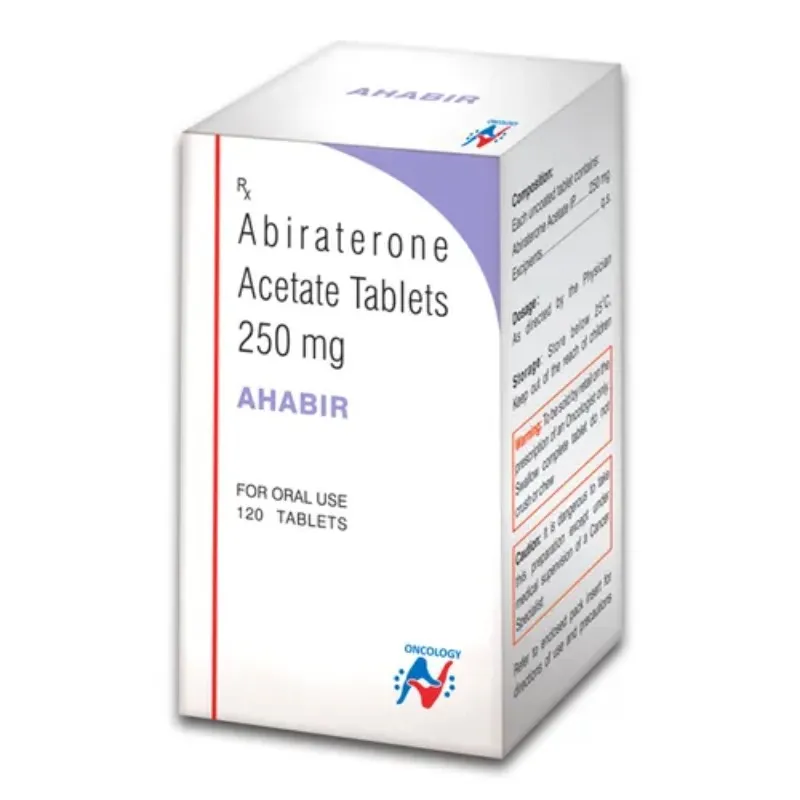
Ahabir 250mg Tablet
Description
Product Overview
Ahabir 250mg Tablet is a pharmaceutical formulation containing Abiraterone Acetate 250mg as its active pharmaceutical ingredient (API). Abiraterone acetate belongs to the androgen biosynthesis inhibitor class of medicines and is used in specific clinical settings involving prostate cancer.
Androgens, including testosterone, are hormones that can contribute to the growth of certain prostate cancer cells. Abiraterone acetate works by reducing androgen production through the inhibition of an enzyme involved in hormone synthesis.
This page provides factual pharmaceutical information about Ahabir 250mg Tablet, including its composition, pharmacological characteristics, clinical considerations and safety information. The information should be interpreted alongside the applicable approved product documentation and relevant regulatory requirements.
Product Composition and Characteristics
Product Name: Ahabir 250mg Tablet
Active Ingredient: Abiraterone Acetate
Strength: 250mg per tablet
Dosage Form: Oral Tablet
Therapeutic Category: Oncology
Pharmacological Class: Androgen Biosynthesis Inhibitor
The product composition, manufacturing specifications, packaging details and regulatory status should be verified against the relevant approved product documentation.
Pharmacological Information
Abiraterone acetate is converted into abiraterone in the body. It inhibits the CYP17 enzyme, which plays an important role in androgen biosynthesis.
CYP17 is involved in the production of androgens in the adrenal glands, testes and tumour tissue. Inhibiting this enzyme reduces androgen production, which forms the basis of abiraterone's pharmacological activity in certain prostate cancer treatment settings.
Its clinical application depends on the patient's diagnosis, disease characteristics, treatment history and the locally approved indication.
Clinical Use and Safety Information
Abiraterone acetate is used in specific approved treatment settings involving prostate cancer. Depending on the approved indication, it may be administered alongside androgen deprivation therapy and a prescribed corticosteroid.
Treatment selection and patient eligibility must be assessed by an appropriately qualified oncology specialist.
Potential adverse reactions and safety considerations include increased blood pressure, fluid retention, reduced blood potassium levels, liver function abnormalities, fatigue and joint discomfort. Cardiovascular complications may also be relevant in susceptible patients.
Appropriate clinical monitoring may include liver function tests, blood pressure assessment, serum potassium measurement and evaluation of fluid retention. Healthcare professionals should consider the patient's medical history, existing conditions and concomitant medicines.
Administration and Prescribing Considerations
Abiraterone acetate has specific food-related administration requirements because food can significantly affect its absorption and exposure in the body.
The administration schedule, corticosteroid combination, treatment duration and monitoring requirements must follow the applicable approved prescribing information. Patients should not independently modify or discontinue prescribed treatment.
Frequently Asked Questions (FAQs)
1. What is Ahabir 250mg Tablet?
Ahabir 250mg Tablet is a pharmaceutical formulation containing Abiraterone Acetate 250mg as its active ingredient. It belongs to the androgen biosynthesis inhibitor class.
2. What is the active ingredient in Ahabir 250mg Tablet?
The active pharmaceutical ingredient is Abiraterone Acetate, which is involved in reducing androgen production through CYP17 enzyme inhibition.
3. What is the pharmacological action of Abiraterone Acetate?
Abiraterone inhibits the CYP17 enzyme, which plays a role in androgen production. This mechanism is relevant to specific hormone-based prostate cancer treatment approaches.
4. What safety considerations are associated with Abiraterone Acetate?
Important safety considerations include increased blood pressure, fluid retention, reduced potassium levels and changes in liver function. Appropriate monitoring is required during treatment.
5. Why is medical monitoring important during Abiraterone treatment?
Monitoring helps healthcare professionals evaluate liver function, blood pressure, serum potassium and fluid status, supporting the assessment of potential treatment-related adverse reactions.
6. Where can healthcare professionals obtain additional product information?
Healthcare professionals should refer to the applicable approved prescribing information and verified product documentation for complete composition, indications, contraindications and safety details.
Medical and Regulatory Disclaimer: This information is intended for pharmaceutical reference and does not replace approved prescribing information or professional medical judgement.