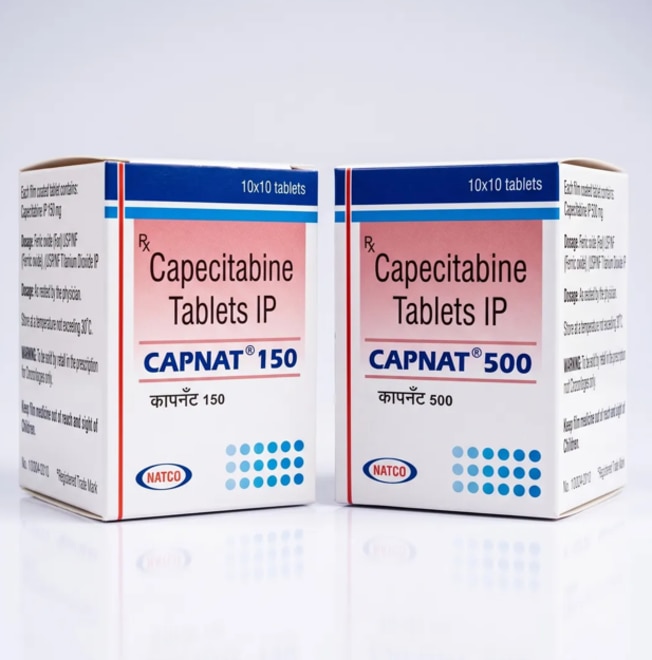
A 150 mg or 500 mg tablet is a product strength, not a complete capecitabine treatment dose. Buyers in Nagpur can reduce dispensing, regulatory and shipment failures by matching the prescribed regimen, manufacturer, batch records, quality documents and destination-market permissions before approving an order.
Key takeaways
- Combine 150 mg and 500 mg tablets only against the prescribed total dose.
- Check strength, batch number, expiry date and pack integrity before approval.
- Request the batch certificate of analysis and manufacturing licence documents.
- Confirm storage conditions and importing-country documents before shipment.
Why Buyers Need Both 150 mg and 500 mg Tablets
Both strengths are useful because a prescribed total dose may require a practical combination of capecitabine 150 mg tablets and capecitabine 500 mg tablets. The 150 mg strength allows finer adjustment, while the 500 mg strength reduces tablet count for larger doses; neither tablet strength represents the patient’s complete dose.
Capecitabine dosing depends on the cancer indication, body-surface area dosing, treatment cycle and combination regimen. A commonly labelled schedule is 1,250 mg/m² twice daily for 14 days, followed by 7 days without treatment, but other regimens use different amounts.
Do not convert a tablet strength directly into a prescribed dose or substitute one strength without the prescriber’s confirmed schedule.
Before approving quantities, match the order to these clinical details:
- Confirm the indication, dose in milligrams or milligrams per square metre, administration frequency, treatment days and rest days.
- Ask whether the prescriber intends a combination of 150 mg and 500 mg tablets, rather than assuming that one strength replaces the other.
- Confirm creatinine clearance before supply. The labelled starting dose is reduced to 75% when creatinine clearance is 30–50 mL/min; capecitabine is contraindicated below 30 mL/min.
- Calculate the required quantity for the complete cycle, including each strength, and compare it with the requested pack sizes.
- Keep the prescription, product artwork and supplied strength aligned; a carton labelled 150 mg cannot support a 500 mg dispensing decision.
Checks Before Approving a Patient-Specific Capecitabine Order
Approve a patient-specific regimen only against a valid prescription from an authorised prescriber. Confirm the indication, body-surface area, dose in mg/m², dosing frequency, treatment days, rest days, combination medicines and intended cycle. Capecitabine is a prescription-only medicine; 150 mg or 500 mg describes tablet strength, not the patient’s complete dose.
1. Check renal function before confirming quantity. Use the documented creatinine clearance: the labelled starting dose is reduced to 75% when clearance is 30–50 mL/min, and capecitabine is contraindicated below 30 mL/min. Do not approve supply from serum creatinine alone or treat the strengths as interchangeable without the prescriber’s regimen.
2. Calculate the tablet count per cycle from the prescription, not from a standard pack. A commonly labelled schedule is twice daily for 14 days followed by 7 days off, creating 28 administration times, but indications and combination regimens differ. Record the number of 150 mg and 500 mg tablets separately.
3. Match the requested quantity to the manufacturer’s sealed pack size. Confirm how many packs are needed, whether an opened pack creates loose tablets, and whether the destination permits that pack configuration.
4. Confirm the label, language, batch identification, expiry and remaining shelf life before approval. Record that tablets must be taken with food within 30 minutes after a meal and swallowed whole with water.
Do not authorise crushing, chewing, or repackaging into unlabelled tablets. Those actions create identification and cytotoxic-handling risks. Also verify the importing country’s prescription, import-permit and cytotoxic-medicine rules before release.
How to Match the Product, Batch and Importing-Country Requirement
Approve a capecitabine shipment only after the proposed manufacturer, physical pack and destination-market file identify the same product. Compare manufacturers by marketing authorisation, manufacturing site, tablet appearance, excipients, imprint, pack size, tamper evidence and available batch records; strength alone cannot establish equivalence. Brand-generic substitution requires importer and regulatory review, not a visual match.
| Check | Required match | Release-blocking discrepancy |
|---|---|---|
| Artwork | Product name, 150 mg or 500 mg strength, manufacturer, dosage form, pack size and approved language | Artwork shows the wrong strength, unapproved wording or unexplained relabelling |
| Physical pack | Cartons and blisters show the same batch number, manufacture date, expiry date, imprint and tamper evidence | Carton and blister details differ, or a seal is broken |
| Certificate of Analysis | Batch number, product, strength, site and dates match the pack; assay, dissolution, identification, uniformity, related substances and release decision meet the approved specification | CoA covers another batch or says only “passes QC” |
| Destination approval | Marketing authorisation or documented exemption, import permit, labelling acceptance and required remaining shelf life are confirmed | Indian approval or GMP evidence is treated as permission to market abroad |
Use the reconciliation file to confirm:
- The manufacturing-site GMP certificate proves site compliance, not batch conformity.
- The wholesale drug licence proves legal supply authority; a CPP addresses regulatory status through the competent authority’s WHO-format process.
- Confirm prescription, cytotoxic-handling, pharmacovigilance and language rules with the importing-country authority before release. A supplier letter labelled “CPP” is not equivalent to an official certificate.
What the Quality Documentation Packet Must Prove
A Certificate of Analysis proves whether one named batch met its approved release specification. It does not prove the manufacturing site is authorised, the supplier may legally wholesale the product, or the product holds destination-market approval.
| Document | What it establishes | What to verify |
|---|---|---|
| Certificate of Analysis | Batch conformity and batch release | Product name, 150 mg or 500 mg strength, batch number, manufacture and expiry dates, identification, assay, dissolution, uniformity of dosage units, related substances, test methods or pharmacopoeial references, acceptance limits and release decision |
| Manufacturing licence | Manufacturing authority | Current licence, exact manufacturing site, dosage form and tablet strength |
| GMP certificate or inspection record | GMP status of the named site | Issuing authority, validity, site address and coverage of finished tablets |
| Wholesale drug licence | Legal supply authority | Licence holder, permitted activities and product category |
| Certificate of Pharmaceutical Product and marketing authorisation | Regulatory status | Official WHO-format process where applicable, product, active ingredient, dosage form, manufacturing site and destination-market registration |
Ask for the approved specification behind every CoA limit; “passes QC” is not enough. Reconcile the CoA with each carton and blister: name, strength, batch, expiry, manufacturing site, pack size and tamper evidence must match.
A different batch, unexplained relabelling, or 150 mg artwork attached to 500 mg documents blocks release. A distributor invoice or private “quality certificate” cannot replace a manufacturing licence, GMP evidence, wholesale licence, CPP or marketing authorisation.
Storage, Export Coordination and a Practical Pre-Shipment Packet
Keep the tablets in their approved pack, below 30°C, with moisture protection. Do not assume that “ambient” transport through Nagpur’s summer heat is acceptable: request the labelled storage statement, temperature monitoring method, permitted excursion limits and the procedure for a temperature breach.
1. Before quotation, confirm the manufacturer, actual manufacturing site, dosage form, pack sizes, batch availability and proposed expiry. Ask for the site’s current manufacturing authorisation, applicable wholesale sale licence and GMP certificate; a distributor invoice or private quality certificate does not prove legal supply.
2. Match the shipment to the importing country’s product registration, import permit, language and artwork requirements. Confirm whether the buyer needs a Certificate of Pharmaceutical Product, and require an official WHO-format certificate identifying capecitabine, tablet strength, dosage form, manufacturing site and regulatory status—not a supplier letter labelled “CPP.”
3. Review stability evidence against the route and market. ICH Zone IVb long-term conditions are 30°C ± 2°C and 75% ± 5% relative humidity, but those conditions do not authorise uncontrolled heat, humidity or a damaged moisture barrier.
4. Require the batch CoA, with identity, assay, dissolution, impurities, uniformity, microbiological results, batch number, manufacturing date, expiry date and specification references. A CoA proves batch conformity; it does not replace GMP evidence, a wholesale licence, CPP or marketing authorisation.
5. Before dispatch, assemble the approved quotation, commercial invoice, packing list, certificate of origin, export documents, airway bill or bill of lading, temperature records and excursion declaration. Cordium Pharmaceuticals Pvt Ltd can confirm which documents are available before a buyer commits.
Have the importer verify customs classification, import approval, consignee details and document consistency before shipment. A mismatch in strength, batch number or manufacturer can delay clearance even when the product itself meets specification.
Frequently asked questions
Why are both 150 mg and 500 mg capecitabine tablets useful?
The 500 mg tablet reduces tablet count for larger doses, while the 150 mg tablet allows finer dose adjustment. Use both strengths only to match the prescribed total dose.
What should buyers check before approving a patient-specific capecitabine order?
Check the prescription, patient dose, tablet strength, quantity, treatment schedule, expiry date, batch number, pack integrity and any contraindication or handling requirements stated by the responsible clinician.
How can buyers match the product, batch and importing-country requirement?
Match the product name, strength, dosage form, pack size, batch number and expiry date across the quotation, labels, invoice, packing list and quality documents. Confirm the importing country’s registration, labelling and import-permit requirements before dispatch.
What should a capecitabine quality documentation packet prove?
It should identify the product and batch and include documents such as the certificate of analysis, manufacturing licence details, packing information and any certificate or declaration required by the importing authority.
What belongs in a practical pre-shipment packet?
Prepare the commercial invoice, packing list, airway bill or bill of lading details, batch certificate of analysis, product photographs, storage and transport instructions, and importing-country permits or declarations.