Humag injections
Description
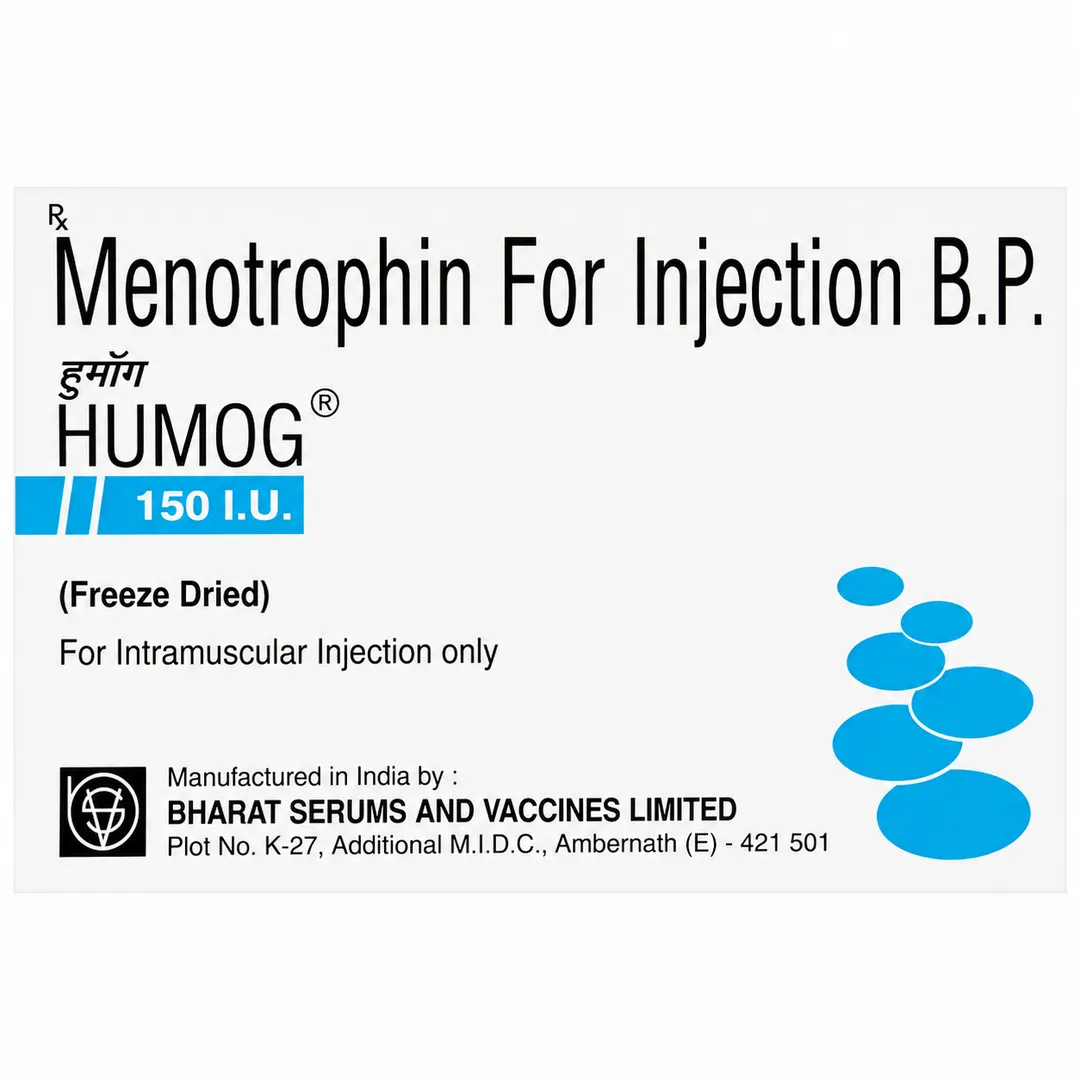
Humog Injection is a fertility hormone brand containing Menotrophin (Human Menopausal Gonadotropin / HMG). It is marketed by Bharat Serums and Vaccines Ltd. Humog is available in strengths such as 75 IU, 150 IU, 225 IU (depending on formulation). �
1mg +1
Humog – Composition
Active ingredient:
• Menotrophin (HMG)
• Contains FSH (Follicle Stimulating Hormone) + LH (Luteinizing Hormone) activity �
1mg +1
Uses of Humog
Female infertility
Helps stimulate ovarian follicles (egg development)
Used in ovulation induction in women with ovulation problems
Used in assisted reproductive technology (ART) / IVF protocols to support multiple follicle development �
1mg
Male infertility
Used in selected cases of male hypogonadism and low sperm production under specialist supervision �
1mg
Advantages / Benefits
✅ Supports controlled ovarian stimulation in fertility treatment
✅ FSH + LH activity helps follicle growth and maturation
✅ Used in IVF and fertility clinics
✅ Injectable hormone option with established clinical use
✅ Available in multiple IU strengths for different protocols �
1mg +1
Important Safety Points
Prescription medicine; use only under fertility specialist guidance
Possible effects: injection-site pain, headache, abdominal discomfort, nausea
Can increase risk of ovarian hyperstimulation syndrome (OHSS) and multiple pregnancy in some patients �
1mg
Why Choose Cordium Pharma for Humog / IVF Products
Cordium Pharma focuses on:
✔ Quality-focused sourcing from approved pharmaceutical manufacturers
✔ Support for international IVF & gynecology product requirements
✔ Export documentation assistance (COA, batch documents, regulatory paperwork as applicable)
✔ Reliable supply chain management
✔ Professional communication and customer support
✔ Focus on fertility clinics, distributors, and healthcare markets
Target markets with fertility demand: Middle East, Africa, Southeast Asia, and selected regulated markets (subject to country registration/import rules).
For export, Humog-type hormonal products usually require country-specific registration, cold-chain handling (commonly 2–8°C), and import approvals. �