Golimumab Injection: Uses, Benefits, Dosage, Side Effects & FAQs
Description
Golimumab Injection
Effective Treatment for Rheumatoid Arthritis, Psoriatic Arthritis, Ulcerative Colitis & Ankylosing Spondylitis
Golimumab Injection is a prescription biologic medicine used to treat several chronic autoimmune and inflammatory conditions. It belongs to the class of medications known as Tumor Necrosis Factor (TNF)-alpha inhibitors, which help reduce inflammation by blocking the activity of TNF-alpha, a protein responsible for inflammation in the body.
Golimumab is commonly prescribed when conventional disease-modifying drugs (DMARDs) do not provide adequate symptom relief.
What is Golimumab Injection?
Golimumab is a monoclonal antibody that suppresses the immune system to reduce inflammation and prevent joint and tissue damage.
It is available as:
Prefilled syringe
Auto-injector pen
Intravenous infusion (Golimumab IV)
Common strength:
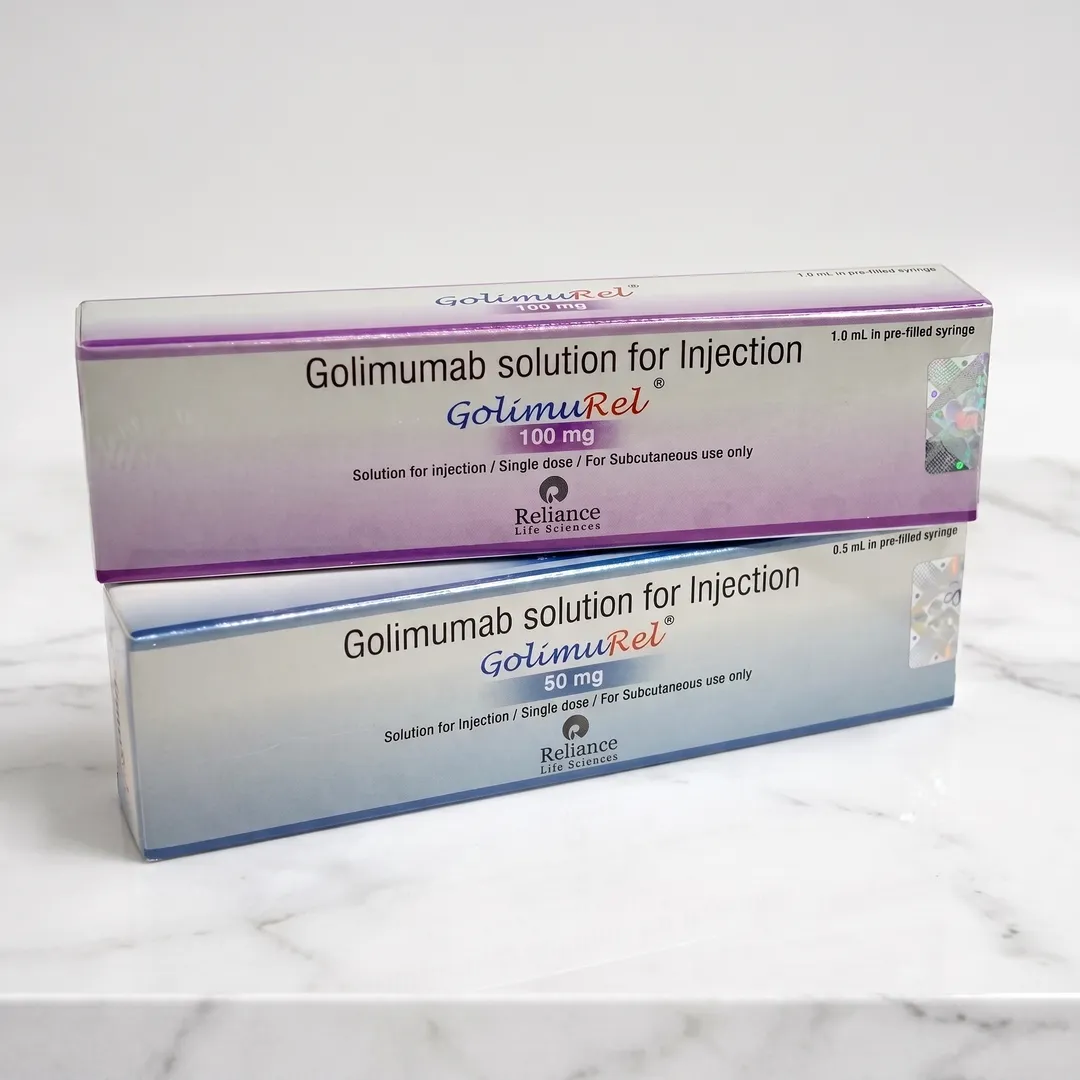
Golimumab Injection 50 mg/0.5 mL
Golimumab Injection Uses
Doctors prescribe Golimumab for treating:
Rheumatoid Arthritis (RA)
Reduces joint pain and swelling
Prevents joint damage
Improves mobility
Psoriatic Arthritis (PsA)
Controls inflammation
Improves skin symptoms
Prevents permanent joint damage
Ankylosing Spondylitis (AS)
Relieves spinal pain
Improves flexibility
Reduces stiffness
Ulcerative Colitis (UC)
Helps induce remission
Reduces bowel inflammation
Controls flare-ups
Polyarticular Juvenile Idiopathic Arthritis (in approved regions)
Reduces inflammation
Improves physical function
How Golimumab Works
Golimumab blocks Tumor Necrosis Factor-alpha (TNF-α), an inflammatory protein that contributes to autoimmune diseases.
By inhibiting TNF-alpha, Golimumab:
Reduces inflammation
Prevents immune system overactivity
Protects joints and tissues
Improves quality of life
Golimumab Injection Benefits
Patients may experience:
Reduced joint pain
Less swelling
Improved mobility
Better physical function
Fewer disease flare-ups
Reduced intestinal inflammation
Improved skin lesions in psoriatic arthritis
Better long-term disease control
Golimumab Dosage
The dosage depends on the condition being treated.
Typical Adult Dose
Rheumatoid Arthritis
50 mg once every month
Psoriatic Arthritis
50 mg once monthly
Ankylosing Spondylitis
50 mg monthly
Ulcerative Colitis
Initial higher induction doses followed by maintenance therapy every 4 weeks
Important: Always follow your doctor's prescribed dosing schedule.
How to Use Golimumab Injection
Inject under the skin (subcutaneous injection).
Rotate injection sites.
Store in a refrigerator.
Do not freeze.
Allow the medicine to reach room temperature before injection.
Do not shake the syringe or auto-injector.
Possible Side Effects
Common side effects include:
Injection site redness
Headache
Upper respiratory infections
Fatigue
Mild fever
Nausea
Serious side effects may include:
Severe infections
Tuberculosis activation
Allergic reactions
Liver problems
Heart failure worsening
Blood disorders
Increased risk of certain cancers (rare)
Seek immediate medical attention if severe symptoms occur.
Precautions Before Using Golimumab
Tell your healthcare provider if you have:
Tuberculosis
Hepatitis B infection
Heart failure
Multiple sclerosis
Active infections
Recent vaccination
Pregnancy or breastfeeding
Screening for tuberculosis is usually recommended before starting treatment.
Drug Interactions
Golimumab may interact with:
Other biologic medicines
Live vaccines
Immunosuppressants
Corticosteroids
Methotrexate
Always inform your doctor about all medications you are taking.
Storage Instructions
Store between 2°C and 8°C
Keep in original packaging
Protect from light
Do not freeze
Keep away from children
Who Should Not Use Golimumab?
Golimumab may not be suitable for patients with:
Active serious infections
Untreated tuberculosis
Severe allergic reaction to Golimumab
Certain neurological disorders
Severe heart failure
Consult your physician before use.
Why Choose Golimumab?
Golimumab offers:
Once-monthly dosing
Proven effectiveness
Long-term disease control
Convenient self-injection
Reduced joint damage progression
Improved quality of life
Frequently Asked Questions (FAQs)
1. What is Golimumab Injection used for?
Golimumab treats autoimmune diseases including rheumatoid arthritis, psoriatic arthritis, ankylosing spondylitis, and ulcerative colitis.
2. How often is Golimumab Injection administered?
Most patients receive one injection every four weeks, although dosing may vary depending on the condition.
3. Can Golimumab cure rheumatoid arthritis?
No. Golimumab does not cure rheumatoid arthritis but helps control symptoms, reduce inflammation, and slow disease progression.
4. Is Golimumab a biologic medicine?
Yes. Golimumab is a biologic TNF-alpha inhibitor made using recombinant DNA technology.
5. What are the common side effects of Golimumab?
Common side effects include injection site reactions, headache, upper respiratory infections, nausea, and fatigue.