Capsy Tablets: Uses, Benefits, Side Effects, Strengths and FAQs
Description
Capsy Tablets contain capecitabine, an oral anticancer medicine prescribed for the treatment of certain types of cancer. Depending on the patient's diagnosis and treatment plan, capecitabine may be used for colorectal cancer, breast cancer, and other approved cancer indications. It may be prescribed alone or in combination with other anticancer medicines under the supervision of a qualified oncologist.
Capecitabine works by converting into an active anticancer substance in the body, which interferes with the growth and multiplication of cancer cells. The suitability of treatment depends on the cancer type, disease stage, previous therapies, and the patient's overall health.
Cordium Pharmaceuticals Pvt Ltd provides pharmaceutical product information to support healthcare professionals, distributors, and other relevant stakeholders seeking information about oncology medicines.
Capsy Tablet Strengths and Composition
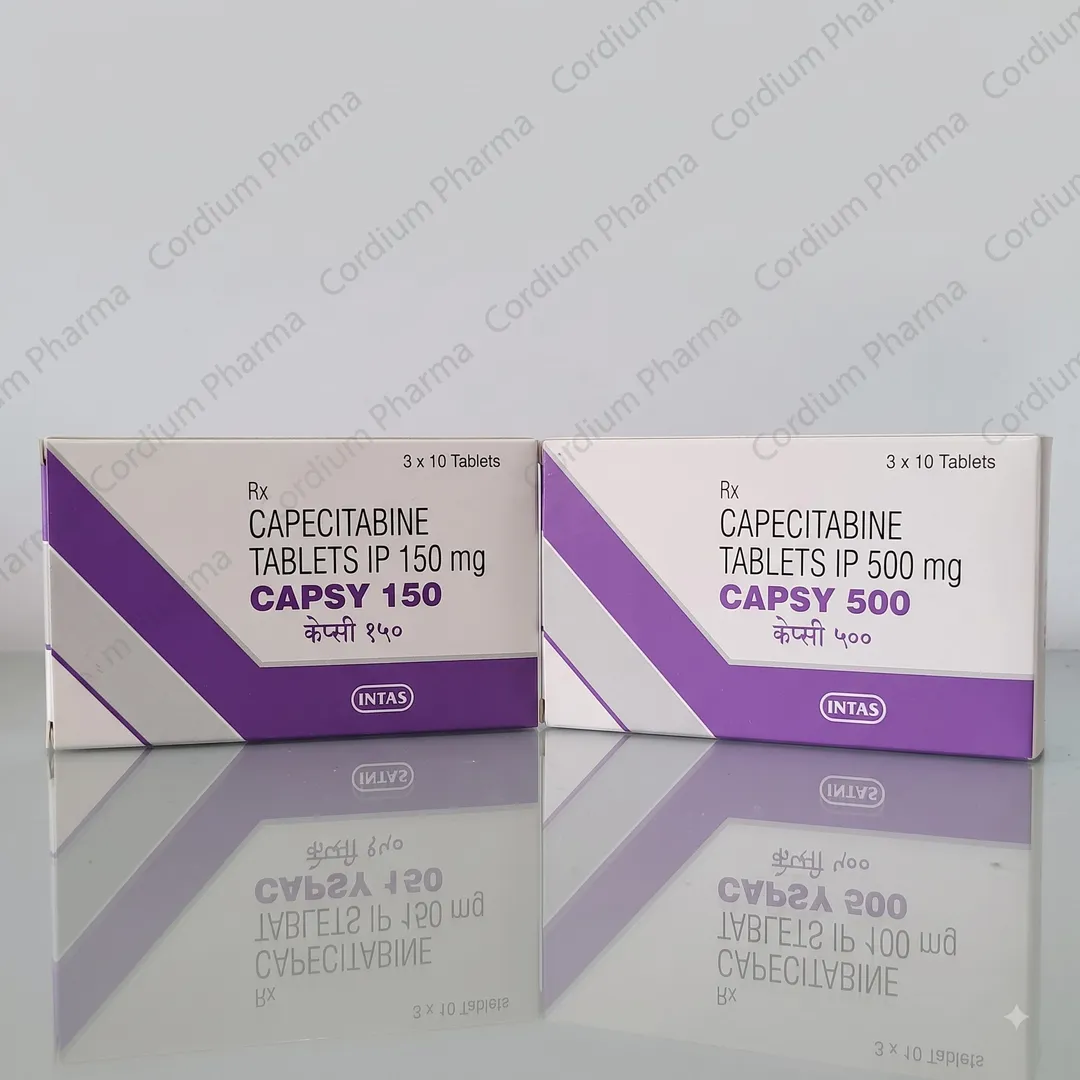
Capsy Tablets may be listed in the following strengths, subject to verification against the actual product range and approved packaging:
Capsy 150 mg Tablet: Contains capecitabine 150 mg.
Capsy 500 mg Tablet: Contains capecitabine 500 mg.
Both strengths contain the same active ingredient but differ in the amount of capecitabine per tablet. The prescribed dose and combination of tablet strengths must be determined by the treating oncologist. Confirm the product manufacturer, marketing authorization, composition, and availability before placing an order.
Uses and Benefits of Capsy Tablets
1. Treatment of Colorectal Cancer
Capecitabine is used in specific treatment plans for colon and rectal cancer. It may help control cancer growth and may be prescribed after surgery or for advanced disease, depending on the clinical indication.
2. Treatment of Breast Cancer
Capsy may be prescribed for eligible patients with certain forms of breast cancer, particularly in treatment settings where capecitabine is considered appropriate by the oncology specialist.
3. Oral Chemotherapy Option
As an oral anticancer medicine, capecitabine can be administered by mouth rather than through an intravenous infusion. This may offer practical convenience for eligible patients while still requiring careful medical supervision.
4. Individualized Cancer Treatment
The 150 mg and 500 mg tablet strengths can support individualized dosing when prescribed appropriately. Treatment outcomes vary between patients, and no particular result can be guaranteed.
Capsy Tablets Side Effects
Capsy Tablets may cause side effects, and their severity varies between individuals. Commonly reported effects include:
Nausea and vomiting
Diarrhoea
Abdominal discomfort
Tiredness and weakness
Reduced appetite
Mouth sores
Redness, pain, swelling, or peeling of the hands and feet
Changes in blood cell counts
Important safety information: Severe diarrhoea, dehydration, fever, unusual bleeding, chest pain, or serious skin reactions require prompt medical assessment. Contact the treating healthcare professional immediately if severe or unusual symptoms develop.
Patients should inform their doctor about kidney or liver problems, heart conditions, pregnancy, breastfeeding, and all medicines they take. Capecitabine can cause serious toxicity in people with dihydropyrimidine dehydrogenase (DPD) deficiency. Appropriate assessment and monitoring should follow current prescribing guidance.
Frequently Asked Questions (FAQs)
What is Capsy Tablet used for?
Capsy contains capecitabine, an anticancer medicine used for certain types of colorectal and breast cancer, among other approved indications.
What is the difference between Capsy 150 mg and 500 mg?
The strengths contain different amounts of capecitabine per tablet. The oncologist determines which strength or combination is appropriate for the prescribed treatment.
How should Capsy Tablets be taken?
Take this medicine exactly as prescribed. Capecitabine is generally taken with water within 30 minutes after a meal, according to the prescribed schedule. Do not change the dose without medical advice.
What are the common side effects of Capsy?
Common side effects include diarrhoea, nausea, vomiting, fatigue, abdominal discomfort, mouth sores, and hand-foot skin reactions.
Can Capsy Tablets be taken without a prescription?
No. Capecitabine is a prescription anticancer medicine and must be used under qualified medical supervision.
Where can healthcare professionals enquire about Capsy Tablets?
For product information, verified strengths, documentation, and supply enquiries, contact Cordium Pharmaceuticals Pvt Ltd through its official website.
Medical Disclaimer
This page is for general informational purposes only and does not replace professional medical advice, diagnosis, or treatment. Always follow the approved prescribing information and the advice of a qualified oncologist. Product details and availability must be confirmed before publication or purchase.