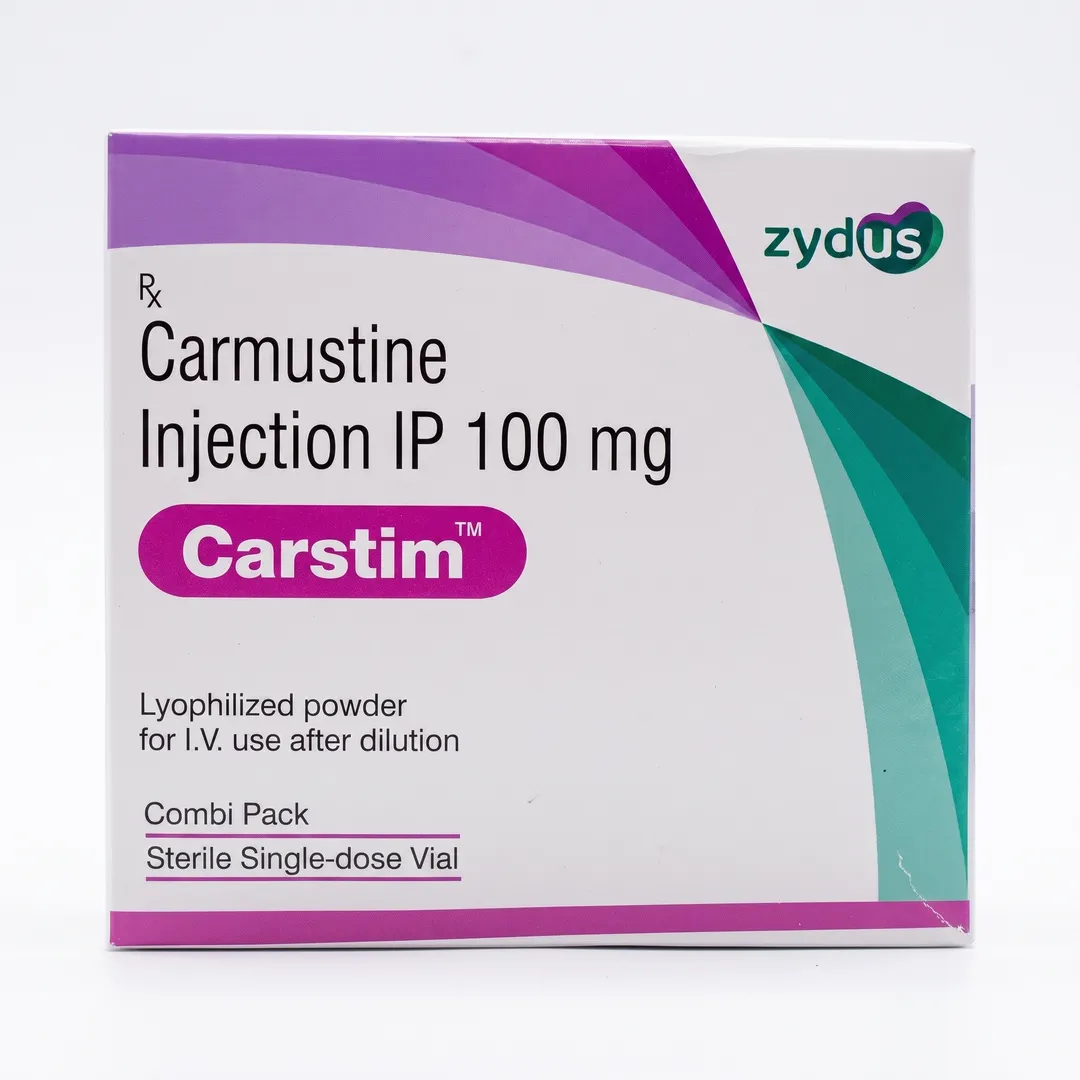
Carstim 100 mg Injection: Uses, Benefits, Side Effects and FAQs
Description
Carstim Injection is an anticancer medicine containing Carmustine 100 mg, used under specialist supervision to manage certain types of cancer. It belongs to the alkylating agents class of chemotherapy medicines and works by damaging the genetic material of cancer cells, helping slow their growth and multiplication.
Cordium Pharmaceuticals Pvt Ltd provides pharmaceutical product information to help healthcare professionals, distributors and other relevant stakeholders understand medicine specifications and therapeutic applications. Product ownership, manufacturing and marketing details should be verified before publication.
Carstim Injection – Product Description
Carstim 100 mg Injection is a prescription chemotherapy medicine supplied as a powder for injection. It is administered intravenously by trained healthcare professionals in a hospital or clinical setting.
Carmustine interferes with DNA and RNA function in cancer cells, preventing them from growing and multiplying normally. The exact treatment protocol depends on the cancer type, the patient's medical condition and the oncologist's assessment.
Composition: Carmustine 100 mg
Dosage form: Powder for injection
Therapeutic category: Antineoplastic chemotherapy
Route of administration: Intravenous, under medical supervision
Uses and Benefits of Carstim Injection
Carstim Injection may be prescribed as part of an individualised cancer treatment plan for certain malignancies, including:
Brain tumours: Used in the management of selected malignant brain tumours, depending on the diagnosis and treatment protocol.
Multiple myeloma: May be used in specific treatment regimens for this bone marrow cancer.
Hodgkin lymphoma: May be included in selected regimens for disease that has returned or has not responded adequately to earlier treatment.
Non-Hodgkin lymphoma: May be used in certain treatment plans for specific lymphoma types.
How Does Carstim Injection Work?
Carmustine damages the DNA of cancer cells and interferes with their ability to reproduce. This action can help control cancer growth. The expected benefit varies according to the cancer type, disease stage and other treatments used. It is not a guaranteed cure, and treatment decisions must be made by a qualified oncologist.
Carstim Injection Side Effects
Like other chemotherapy medicines, Carstim Injection can cause side effects. These may vary between patients and require appropriate medical monitoring.
Possible side effects include:
Nausea and vomiting
Loss of appetite
Headache and dizziness
Weakness and fatigue
Hair loss
Reduced blood cell counts
Injection-site pain or vein inflammation
Liver or kidney function abnormalities
Lung toxicity, including inflammation or scarring
A reduction in blood cell counts may occur several weeks after treatment. Contact the treating team promptly for fever, unusual bleeding, persistent cough or breathing difficulty. Seek urgent medical care for severe symptoms.
Precautions and Safety Information
Carstim Injection must only be administered by qualified healthcare professionals. Patients should inform their oncologist about existing lung, kidney or liver problems, previous chemotherapy, allergies and all medicines being taken.
Regular blood tests and other assessments may be required during treatment and follow-up. Carmustine can harm an unborn baby; patients who are pregnant, planning pregnancy or breastfeeding should discuss the risks with their specialist before treatment. Do not self-administer this medicine or change the prescribed treatment schedule.
Frequently Asked Questions (FAQs)
1. What is Carstim Injection used for?
It is used in selected cancer treatment regimens, including those for certain brain tumours, multiple myeloma and lymphomas.
2. What is the composition of Carstim 100 mg Injection?
Available product references list carmustine 100 mg as its active ingredient. Confirm the composition on the current approved pack.
3. How is Carstim Injection administered?
It is administered into a vein by trained medical personnel according to the oncologist's instructions.
4. What are the common side effects of Carstim Injection?
Nausea, vomiting, fatigue, appetite loss, headache and reduced blood cell counts are possible. Serious lung or organ toxicity can also occur.
5. Does Carstim Injection require a prescription?
Yes. It is a specialist anticancer medicine that requires a prescription and appropriate clinical monitoring.
Medical disclaimer: This information is for educational purposes only and does not replace the approved product information or professional medical advice. Always consult a qualified oncologist before treatment.