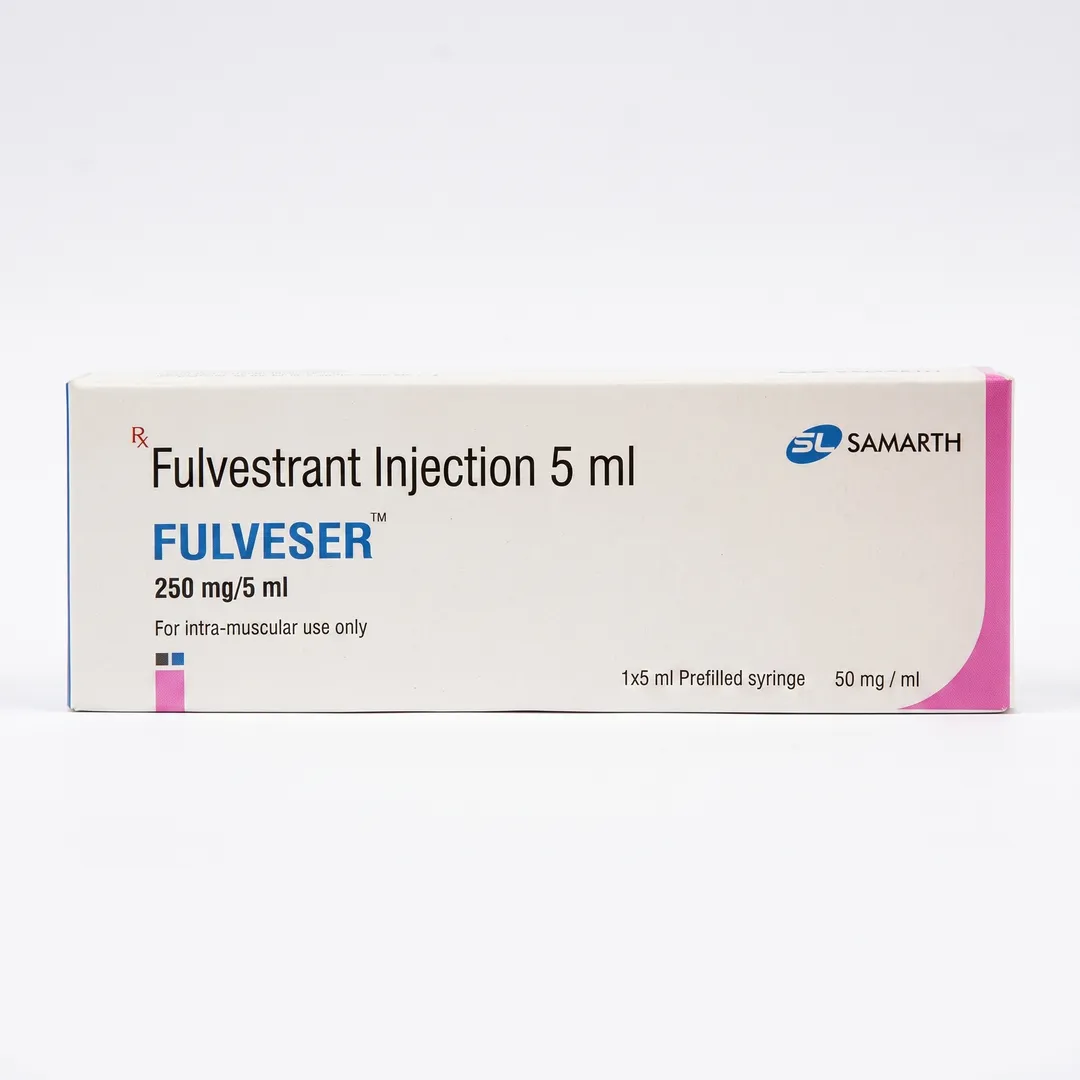
Fulvesar 250 MG Injection – Benefits, Dosage, Side Effects & Uses
Description
Fulvesar 250 MG Injection contains Fulvestrant 250 mg, a hormonal anticancer medicine used to treat certain types of hormone receptor-positive (HR+) advanced or metastatic breast cancer. It works by binding to estrogen receptors and reducing estrogen signaling in cancer cells.
Disclaimer: Fulvesar is a prescription anticancer medicine. It should be used only under the supervision of a qualified healthcare professional.
Uses of Fulvesar 250 MG Injection
Fulvesar may be prescribed for:
Hormone receptor-positive advanced breast cancer
Metastatic breast cancer
HR-positive, HER2-negative advanced or metastatic breast cancer
Breast cancer that has progressed after previous endocrine therapy
Combination treatment with certain targeted medicines when prescribed by an oncologist
Benefits of Fulvesar 250 MG
Targets estrogen receptors: Helps block estrogen signaling in hormone-sensitive cancer cells.
Helps control advanced breast cancer: May slow disease progression in appropriate patients.
Hormonal treatment: Provides an endocrine treatment option for selected breast cancer patients.
Combination therapy: Can be used with certain targeted cancer medicines when clinically indicated.
Fulvesar 250 MG Dosage
The dose and treatment schedule are determined by the treating oncologist.
For many adult indications, fulvestrant is commonly administered at 500 mg intramuscularly, with doses given according to the recommended treatment schedule. A 250 mg dose may be used in certain patients with moderate hepatic impairment.
Fulvesar should be administered by a qualified healthcare professional and should not be self-injected.
How Is Fulvesar Given?
Fulvestrant is administered as a deep intramuscular injection, generally into the gluteal area. Proper injection technique is important.
Fulvesar 250 MG Side Effects
Possible side effects include:
Injection-site pain or reaction
Nausea
Headache
Fatigue
Hot flashes
Back pain
Joint or muscle pain
Vomiting
Constipation
Loss of appetite
Weakness
Increased liver enzymes
Contact your healthcare provider if side effects are severe or persistent.
Precautions
Tell your doctor if you have:
Liver disease
Bleeding problems
Low platelet counts
A condition requiring anticoagulant treatment
An allergy to fulvestrant
Fulvestrant may cause fetal harm. Patients who are pregnant or may become pregnant should discuss appropriate precautions with their healthcare provider.
FAQs
What is Fulvesar 250 MG Injection used for?
It is used for selected patients with hormone receptor-positive advanced or metastatic breast cancer.
Is Fulvesar chemotherapy?
No. Fulvestrant is a hormonal/endocrine anticancer treatment, not conventional cytotoxic chemotherapy.
How does Fulvesar work?
It binds to estrogen receptors and promotes their degradation, reducing estrogen receptor signaling in cancer cells.
What is the usual dose of fulvestrant?
For many adult indications, the recommended dose is 500 mg. A 250 mg dose may be appropriate in certain clinical situations, including moderate hepatic impairment.
How is Fulvesar administered?
It is given by intramuscular injection by a trained healthcare professional.
Can Fulvestrant be combined with other medicines?
Yes. Depending on the indication, it may be combined with certain targeted cancer medicines.
Can Fulvesar be used during pregnancy?
Fulvestrant can cause fetal harm. Consult your doctor regarding pregnancy and contraception precautions.
Does Fulvesar cure breast cancer?
It is used to help treat and control certain advanced or metastatic breast cancers. Individual treatment response varies.
Conclusion
Fulvesar 250 MG Injection (Fulvestrant) is an important hormonal treatment option for selected patients with HR-positive advanced or metastatic breast cancer. It works by targeting estrogen receptors and reducing estrogen-driven cancer-cell signaling. Treatment should always be prescribed and monitored by an experienced healthcare professional.