Inlyta Tablets (Axitinib) : Uses, Strengths, Side Effects & Product Information
Description
What Are Inlyta Tablets?
Inlyta Tablets contain axitinib, a targeted anticancer medicine used to treat advanced renal cell carcinoma (RCC), a type of kidney cancer. Inlyta is a tyrosine kinase inhibitor that targets vascular endothelial growth factor (VEGF) receptors involved in the formation of blood vessels that can support tumour growth.
In Singapore, Inlyta is listed in the National Drug Formulary as a prescription-only medicine. Patients and healthcare professionals searching for Inlyta Tablets online should consult registered medicine information and qualified healthcare providers for appropriate treatment guidance.
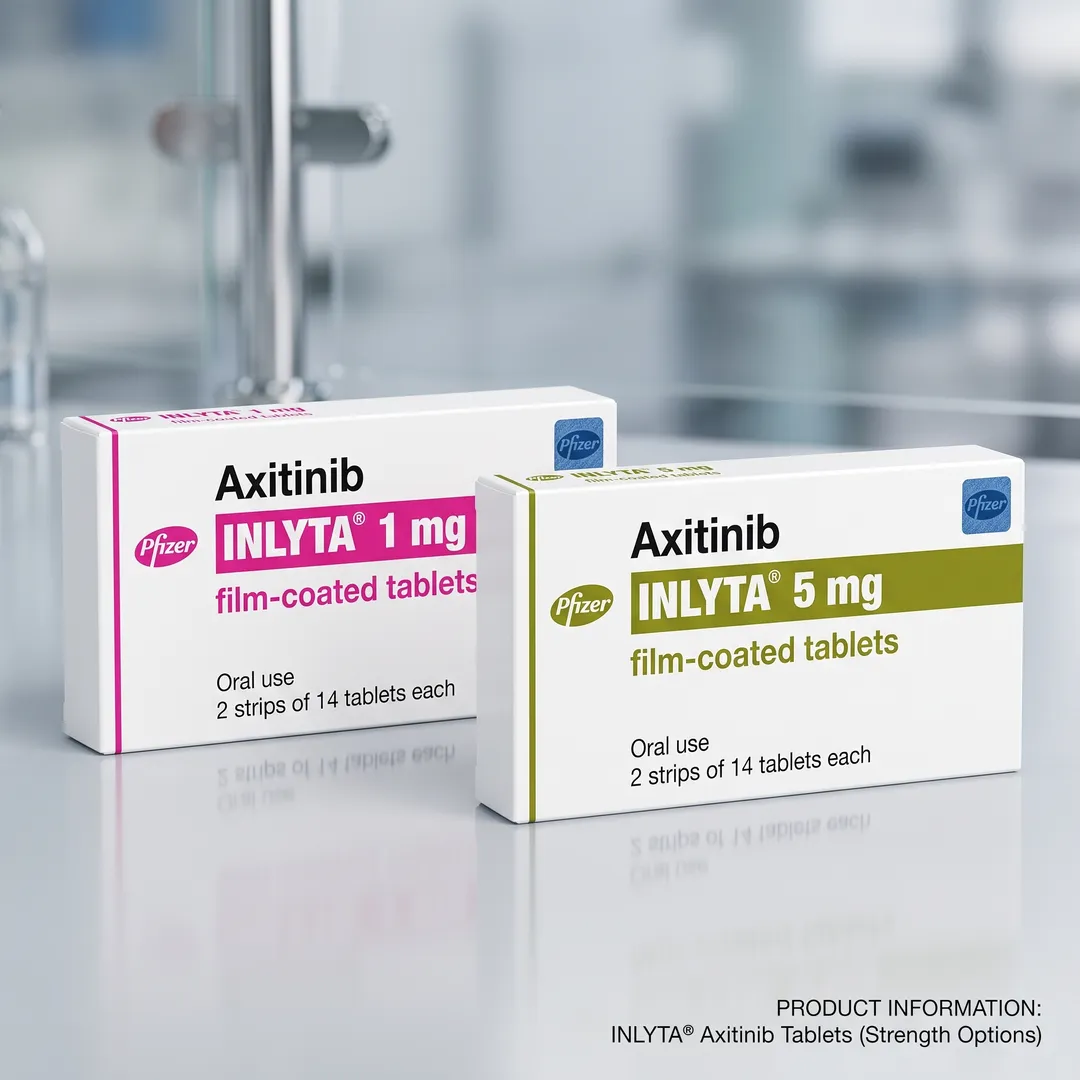
Inlyta Tablets Strengths Available in Singapore
The Singapore National Drug Formulary lists the following Inlyta tablet strengths:
Inlyta 1 mg Tablets: A lower-strength formulation that may be used when a physician adjusts the prescribed dose.
Inlyta 5 mg Tablets: A commonly used strength for treatment according to the prescribed regimen.
Both strengths contain axitinib and are film-coated tablets. Availability should be confirmed with a licensed pharmacy or authorised supplier.
Medical Uses of Inlyta Tablets
Inlyta is indicated in Singapore for treating advanced renal cell carcinoma after one prior systemic therapy has failed. Depending on the applicable approved indication and treatment plan, axitinib may also be used in combination with other anticancer medicines in certain markets.
Axitinib works by inhibiting specific VEGF receptors, helping interfere with the blood vessel formation that supports cancer growth. Treatment decisions depend on the patient's diagnosis, previous therapies, overall health and the locally approved product information.
Important: Inlyta is not intended for self-medication. Only an appropriately qualified oncology specialist can determine whether it is suitable.
How to Take Inlyta Tablets
The Singapore product information specifies a recommended starting dose of 5 mg twice daily for the relevant indication, with doses approximately 12 hours apart. Tablets should be swallowed whole with water and may be taken with or without food.
The treating physician may modify the dose depending on treatment response, tolerability, other medicines and medical conditions. Do not change the dose or stop treatment without medical advice. If a dose is missed or vomiting occurs after taking a dose, do not take an extra dose; follow the prescribed instructions for the next dose.
Possible Side Effects of Inlyta
Like other targeted cancer medicines, Inlyta can cause side effects. Commonly reported effects include:
Diarrhoea, nausea and vomiting
Reduced appetite and weight loss
Tiredness or weakness
High blood pressure
Changes in voice
Redness, soreness or discomfort of the hands and feet
Thyroid function changes
Serious adverse effects can include bleeding, blood clots, heart problems, severe hypertension, liver abnormalities and gastrointestinal perforation. Seek urgent medical attention for chest pain, breathing difficulty, significant bleeding, sudden weakness or severe abdominal pain.
Regular blood pressure checks and appropriate clinical monitoring are important during treatment.
Precautions Before Using Inlyta
Inform your doctor about existing medical conditions, especially high blood pressure, liver problems, bleeding disorders or cardiovascular disease. Provide a complete list of prescription medicines, supplements and herbal products because interactions may occur.
Discuss pregnancy, fertility and breastfeeding with your healthcare professional before treatment. Follow the locally approved patient leaflet for all precautions and monitoring instructions.
Frequently Asked Questions (FAQs)
1. What is Inlyta used for?
Inlyta contains axitinib and is used to treat advanced renal cell carcinoma under the applicable approved treatment indication.
2. What strengths of Inlyta are listed in Singapore?
The Singapore National Drug Formulary lists Inlyta 1 mg and 5 mg film-coated tablets.
3. Is Inlyta available without a prescription in Singapore?
No. Inlyta is classified as a prescription-only medicine in Singapore.
4. What are the common side effects of Inlyta?
Diarrhoea, nausea, fatigue, high blood pressure, reduced appetite and hand-foot discomfort are among the possible side effects.
5. Where can I find reliable information about Inlyta in Singapore?
Consult the Singapore National Drug Formulary, the Health Sciences Authority's medicine information and a licensed healthcare professional for current product and treatment guidance.
Medical Disclaimer: This page is for educational purposes only and does not replace professional medical advice. Always consult a qualified healthcare professional and refer to the latest Singapore-approved product information before using Inlyta.