Treosulfan Injection 5 g – Uses, Benefits, Dosage, Side Effects & FAQs
Description
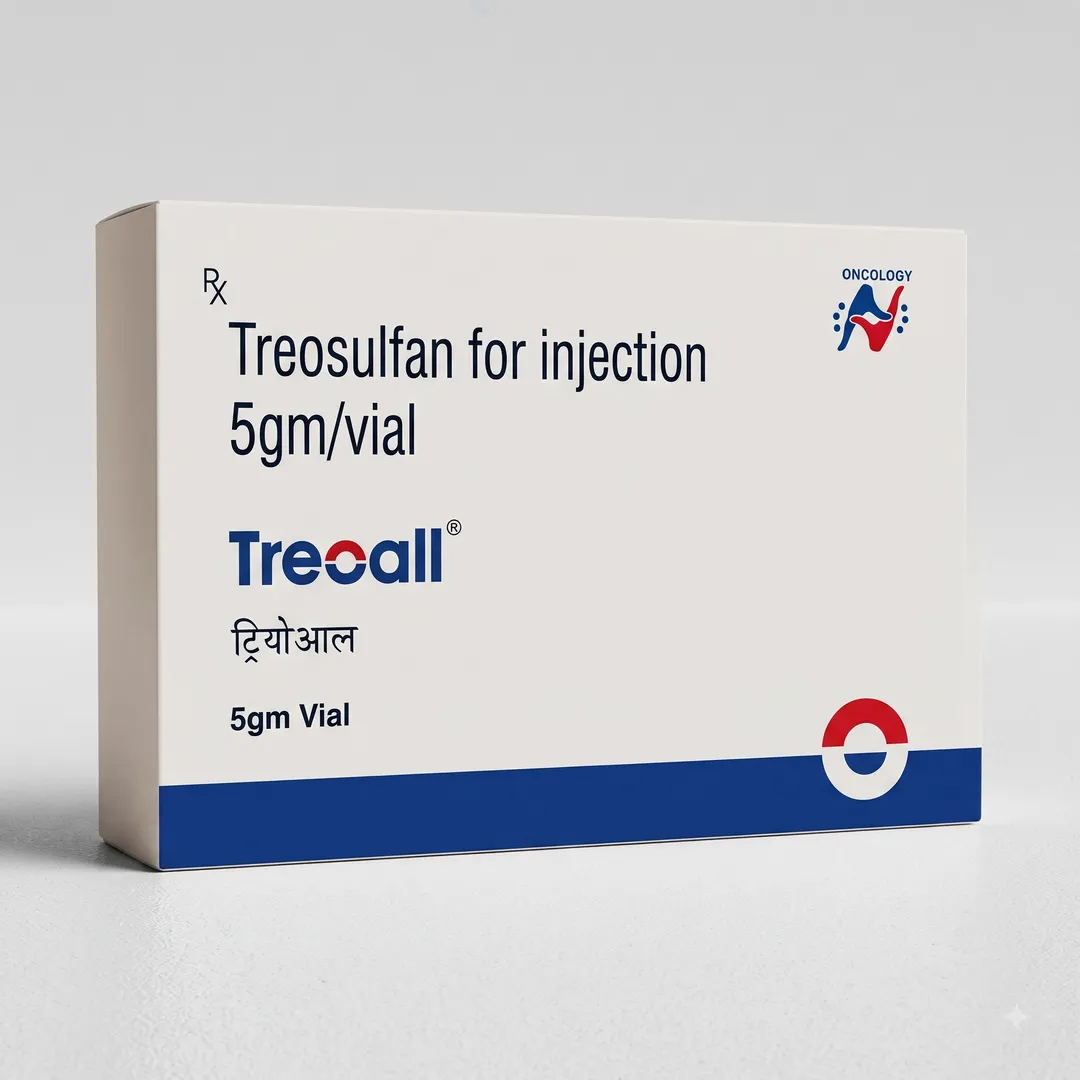
Treosulfan Injection 5 g is an anticancer medicine containing treosulfan, an alkylating agent. Depending on the approved product and indication, treosulfan is used either in chemotherapy for certain cancers or as part of conditioning therapy before allogeneic hematopoietic stem-cell transplantation (alloHSCT).
Key Highlights
Active ingredient: Treosulfan
Strength: 5 g per vial
Dosage form: Powder for solution for infusion
Route: Intravenous infusion
Therapeutic class: Alkylating anticancer agent
Prescription medicine: Yes
Benefits and Uses of Treosulfan Injection
Treosulfan works as a cytotoxic alkylating agent that damages the genetic material of target cells, helping prevent their growth and multiplication.
Its approved use depends on the specific product and country. Treosulfan may be used:
For advanced epithelial ovarian cancer after previous standard therapy in certain jurisdictions.
As part of conditioning therapy before allogeneic stem-cell transplantation, in combination with medicines such as fludarabine.
For conditioning regimens used in selected patients with hematological malignancies such as AML and MDS, according to applicable approvals.
Dosage & Administration
The dosage of Treosulfan Injection must be individualized by an oncologist or transplant specialist according to the indication, body-surface area, blood counts, organ function and treatment protocol.
For some ovarian-cancer regimens, the product information specifies 5–8 g/m² for monotherapy, generally repeated every 3–4 weeks.
For stem-cell-transplant conditioning, the FDA-approved GRAFAPEX regimen uses 10 g/m² once daily for three consecutive days, administered by intravenous infusion before stem-cell infusion.
Treosulfan is supplied as a powder that must be properly reconstituted before intravenous administration by trained healthcare professionals. Do not self-administer this medicine or use the dosage stated above without medical supervision.
Possible Side Effects
Treosulfan can cause significant adverse effects, particularly suppression of blood-cell production. Common or important side effects may include:
Low white blood cell and platelet counts
Anemia
Increased risk of infections
Nausea and vomiting
Diarrhea
Mouth sores or mucositis
Abdominal discomfort
Fatigue
Fever
Swelling
Skin reactions or rash
Changes in liver or kidney laboratory values
Severe or prolonged myelosuppression is an important safety concern, and blood counts require close monitoring during treatment.
Seek urgent medical attention for fever, unusual bleeding or bruising, severe weakness, breathing difficulties, serious skin reactions, or signs of infection.
Important Safety Information
Treosulfan should only be administered under specialist medical supervision. Blood counts and other laboratory parameters should be monitored regularly. Patients should inform their healthcare provider about other medicines, previous chemotherapy or radiotherapy, pregnancy, breastfeeding, allergies, and existing medical conditions.
Treosulfan may also affect fertility and pregnancy, and appropriate reproductive counselling may be required.
Frequently Asked Questions
1. What is Treosulfan Injection 5 g used for?
It is used in specific anticancer treatment and stem-cell-transplant conditioning protocols, depending on the product's approved indication.
2. How is Treosulfan 5 g administered?
It is supplied as a powder that is reconstituted and administered intravenously by qualified healthcare professionals.
3. What is the usual dose of treosulfan?
The dose varies considerably according to the indication and treatment protocol. For example, some ovarian-cancer regimens use 5–8 g/m², while the U.S. GRAFAPEX transplant-conditioning regimen uses 10 g/m² daily for three days.
4. Can Treosulfan be used without a prescription?
No. Treosulfan is a prescription anticancer medicine requiring specialist supervision.
5. Does Treosulfan cause low blood counts?
Yes. Myelosuppression is a major safety concern and can increase the risk of infection and bleeding.
6. Can Treosulfan be used during pregnancy?
Treosulfan can pose risks to an unborn baby. Patients who are pregnant, planning pregnancy, or breastfeeding should discuss treatment with their specialist before administration.
7. Is Treosulfan 5 g suitable for every cancer patient?
No. Its suitability depends on the cancer or transplant indication, treatment history, blood counts, overall health and the approved protocol.
Medical information is for educational purposes only and does not replace the prescribing information or advice of a qualified healthcare professional.