Medical Disclaimer: This information is for educational purposes only and does not replace advice from your oncologist or healthcare team. Always follow your doctor's specific instructions for your treatment.
Understanding Your Prescription
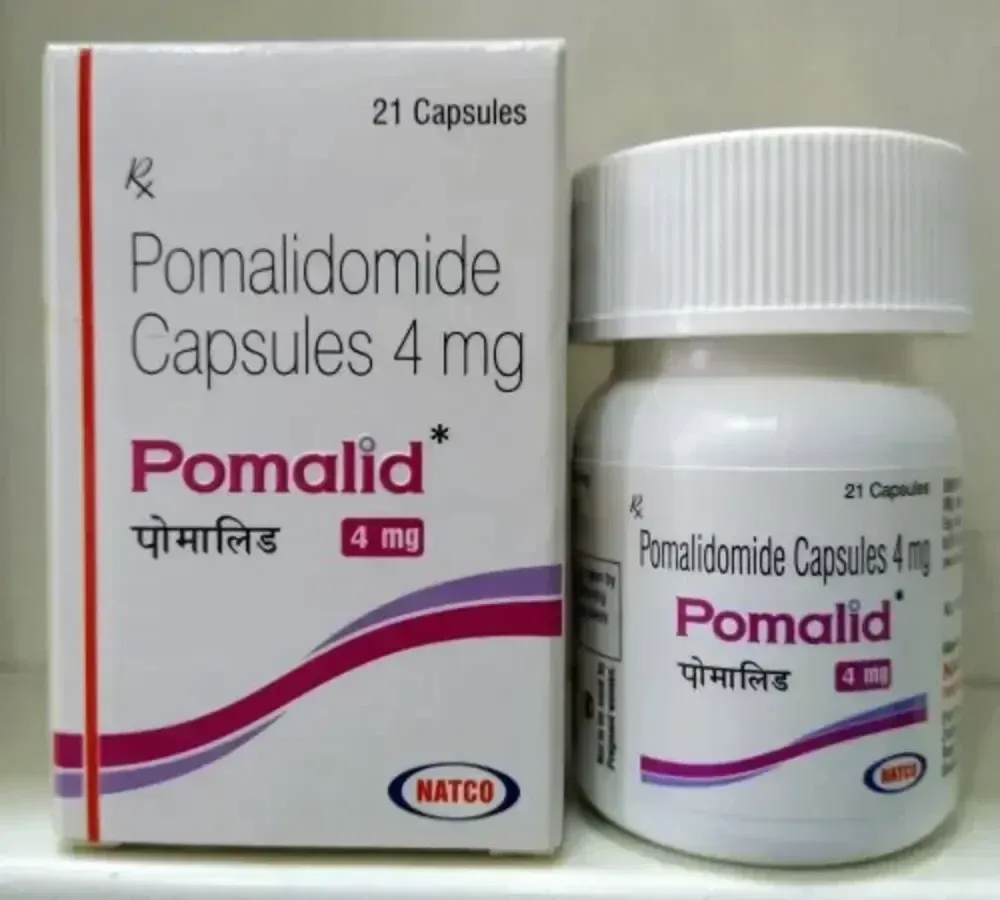
If you've been prescribed Pomalid 4mg capsules (pomalidomide), you're likely dealing with relapsed or refractory multiple myeloma, or in some cases, Kaposi sarcoma. This isn't traditional chemotherapy — it's an immunomodulatory agent that helps your immune system attack cancer cells while cutting off tumors' blood supply.
In India, Pomalid is manufactured by Natco Pharma and prescribed when at least two previous treatments (including lenalidomide and a proteasome inhibitor like bortezomib) haven't controlled the disease. This guide covers how to take it, critical safety rules, side effects, and monitoring — so you feel more in control.
How to Take Pomalid 4mg
The schedule: 4 mg once daily, Days 1–21 of a 28-day cycle. Three weeks on, one week off.
Practical tips:
Take it at the same time daily — set a phone alarm for 8 AM or bedtime
Swallow whole with water, without food (2 hours before/after meals)
Don't open, break, or chew the capsule
Missed dose? Less than 12 hours: take it. More than 12 hours: skip it — never double up
The 7-day break lets blood counts recover. Your doctor checks your CBC regularly to confirm it's safe to continue. Track cycles on a calendar or app — mark Day 1, Day 21 (last dose), Day 22 (restart).
The Pregnancy Prevention Programme — Non-Negotiable
This is the most critical safety requirement. Pomalidomide is related to thalidomide — it causes severe birth defects even after one dose. Every patient (male and female) must enroll before starting.
Women of childbearing potential:
Two negative pregnancy tests before first dose (10–14 days prior, and within 24 hours)
Weekly tests for 4 weeks, then monthly during treatment
Dual contraception (hormonal + barrier) for 4 weeks before, during, and 4 weeks after treatment
No exceptions, even if not sexually active
Men:
Use condoms during sex for entire treatment plus 4 weeks after — drug is present in semen
No semen donation during treatment or 4 weeks after
Partner must use effective contraception if she can become pregnant
Everyone:
No blood donation during treatment or 4 weeks after
Return unused capsules to your pharmacy — don't keep or share them
In India, your oncologist and pharmacy guide you through the manufacturer's (Natco/Cipla) risk management programme. It's paperwork — but it exists for a reason.
Side Effects — What's Common, What Needs a Call
Common (≥20% of patients):
Fatigue, nausea, diarrhea, constipation
Upper respiratory infections
Fever, shortness of breath, cough
Swelling in hands, ankles, feet
Rash, insomnia, decreased appetite
These are usually manageable. Stay hydrated, eat small frequent meals if nauseated, tell your care team — they adjust supportive medications.
Call your doctor immediately (or go to ER) for:
Fever ≥ 38°C (100.4°F) — possible serious infection
Unusual bleeding or bruising (low platelets)
New/worsening shortness of breath
Leg pain, swelling, redness, warmth — possible blood clot
Chest pain, sudden confusion, vision changes — possible stroke/heart attack
Numbness, tingling, burning in hands/feet (neuropathy)
Monitoring schedule:
CBC: Weekly × 8 weeks, then monthly
Liver/kidney function: Regular blood tests
Pregnancy tests: As above for women of childbearing potential
Keep a symptom diary — date, what you felt, severity (1–10). Helps your doctor spot patterns early.
Three Things to Do This Week
Confirm Pregnancy Prevention Programme enrollment — call your oncology clinic if paperwork isn't started
Set up cycle tracking — phone calendar, planner, or app. Mark Day 1, Day 21, Day 22
Save your oncology team's emergency number — not just the clinic line, the after-hours/on-call number
The Bottom Line
Pomalid 4mg helps control your disease, but works best when you're an active partner. Take it consistently. Show up for blood tests. Report symptoms early. Follow pregnancy prevention rules without exception.
You're not alone — your oncology team, pharmacist, and caregivers are part of this. Lean on them.
Read more: [Managing nausea during cancer treatment] • [Nutrition tips for multiple myeloma patients] • [Understanding your blood test results]
Sources: FDA DailyMed (Pomalidomide Capsules Prescribing Information, revised Nov 2025) • EMA Product Information (Pomalidomide Accord) • Cipla Risk Management Support Programme Patient Brochure • eviQ Patient Information (Pomalidomide + Dexamethasone) • HPRA Pomalidomide Pregnancy Prevention Programme Guide
Keywords