Capmide strengths and capecitabine tablet strengths describe different medicines, so their milligram values cannot be compared or substituted. By checking the active ingredient, dosage form, prescribed tablet combination, administration schedule and safety requirements, you can prevent a product-identification or dosing error.
Key takeaways
- Capmide contains enzalutamide in 40 mg, 80 mg, or 160 mg capsules.
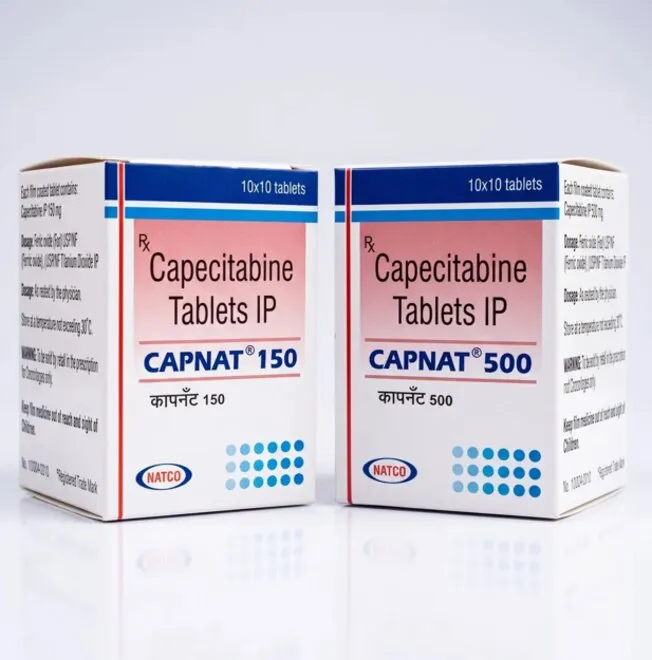
- Capecitabine is supplied as 150 mg and 500 mg film-coated tablets.
- Never substitute strengths or dosage forms without the prescriber’s instruction.
- Verify batch details, expiry, storage conditions, licences, and shipping records before acceptance.
Start with the active ingredient and dosage form
Start with the active ingredient and dosage form, not the brand name or milligram figure. Capmide capsules should identify enzalutamide as the active ingredient and capsules as the dosage form. Capecitabine tablets should identify capecitabine and film-coated tablets; calling them capsules is inaccurate unless a separate market-specific registration proves that presentation.
The strengths are not interchangeable. Capmide 40 mg, 80 mg and 160 mg describe enzalutamide capsules, while capecitabine tablets are supplied as 150 mg and 500 mg strengths. A matching number of milligrams does not indicate an equivalent medicine, dose or treatment effect.
Use active ingredient verification before comparing listings or approving a purchase. Check that the product record, carton and blister or bottle agree on:
- Active ingredient: enzalutamide or capecitabine
- Dosage form: capsule or film-coated tablet
- Declared strength: 40 mg, 80 mg or 160 mg for enzalutamide; 150 mg or 500 mg for capecitabine
- Manufacturer and market-specific registration or authorisation
- Batch or lot number and expiry date
- Labelled storage conditions and pack contents
A listing that says only “150 mg and 500 mg” does not prove that you are receiving capecitabine tablets. Confirm the tablet form and whether the available pack sizes let the pharmacy reproduce the prescribed dose after renal-function or toxicity-related reductions.
Why 40 mg, 80 mg and 160 mg cannot be compared with 150 mg and 500 mg
The milligram numbers belong to different medicines and cannot be compared by size. Capmide 40 mg, Capmide 80 mg and Capmide 160 mg refer to enzalutamide capsule strengths; capecitabine 150 mg and 500 mg refer to film-coated tablet strengths.
| Medicine | Listed strengths | What the strength means |
|---|---|---|
| Capmide (enzalutamide) | 40 mg, 80 mg, 160 mg | The amount of enzalutamide in each capsule |
| Capecitabine | 150 mg, 500 mg | The amount of capecitabine in each tablet |
For a capecitabine 150 mg 500 mg strength comparison, compare combinations within capecitabine treatment, not against Capmide. Calling capecitabine a capsule is inaccurate unless a separate, market-specific registration confirms that dosage form.
The prescriber calculates a dose from body-surface area, treatment indication, kidney function and prior toxicity. For many single-agent indications, the labelled starting regimen is 1,250 mg/m² twice daily on days 1–14 of a 21-day cycle, but the prescribed dose can differ. The pharmacist then combines 150 mg and 500 mg tablets to reach that dose.
For example, a 1,150 mg dose could use two 500 mg tablets and one 150 mg tablet. That arithmetic does not authorise a dose change: renal impairment or adverse effects can require a lower tablet total under the oncology team’s instructions. Do not substitute strengths, split tablets, crush them or combine them independently.
How to take capecitabine tablets on the prescribed cycle
Use the exact dose and treatment cycle schedule written by the oncology team; do not adjust either because the tablets look different or side effects improve. Capecitabine dosing depends on the prescribed regimen, kidney function and treatment response.
1. Take capecitabine after food, within 30 minutes after a meal. Keep the meal relationship consistent each day so administration matches the product-label regimen.
2. Swallow tablets whole with water. Do not chew, crush, split or dissolve them, and do not substitute another strength or combine tablets to create a different dose unless the oncology team or pharmacist confirms the change.
3. Take each dose at the scheduled times and complete only the number of treatment days prescribed. Do not extend the “on” period or shorten the break in the treatment cycle schedule.
4. If you miss a dose, vomit after taking it, or cannot swallow the tablets, do not take an extra dose. Record what happened and contact the oncology team for instructions.
5. Do not stop treatment, restart it, or reduce the dose on your own when diarrhoea, mouth sores, hand-foot syndrome, vomiting or unusual tiredness develops. Call the oncology team promptly; they may prescribe a pause or a lower dose.
6. Keep the tablets in their original moisture-protective packaging and away from children. Confirm the label before every dose, especially when 150 mg and 500 mg tablets are both supplied.
Checks, symptoms and interactions that change the treatment plan
Before the first dose, obtain blood counts, liver function and kidney function, including creatinine clearance. A creatinine clearance of 30–50 mL/min calls for a 75% starting dose; capecitabine is not recommended below 30 mL/min. Do not estimate kidney function from age alone.
Check these findings with the oncology team before continuing:
| Check or trigger | What to monitor | Action |
|---|---|---|
| Blood counts | Neutropenia, anaemia or thrombocytopenia | Contact the team for fever, infection, unusual bruising or bleeding |
| Kidney function | Creatinine clearance and dehydration | Hold treatment until reviewed if renal function worsens or vomiting prevents fluids |
| Liver function | Bilirubin, AST and ALT | Report jaundice, dark urine or severe right-sided abdominal pain |
| Warfarin | PT/INR during and after treatment | Arrange close monitoring; bleeding or a rising INR needs urgent advice |
| Phenytoin | Blood concentration and toxicity symptoms | Report unsteadiness, abnormal eye movements or confusion |
| Leucovorin and CYP2C9 medicines | Increased toxicity or altered exposure | Ask the prescriber to review the full medicine list before treatment |
Stop taking further doses and call the oncology team for persistent diarrhoea, repeated vomiting, painful mouth sores, severe hand-foot redness or blistering, chest pain, or inability to drink. These toxicities can require treatment interruption and a later dose reduction; choosing fewer 150 mg or 500 mg tablets without the prescribed modification plan is not equivalent.
What a professional buyer must verify before accepting a shipment
Do not accept a listing that says only “150 mg and 500 mg.” Confirm that the offered product is capecitabine as film-coated tablets, not a capsule. Capmide capsule listings require separate market-specific registration proving the stated active ingredient and dosage form.
Request these documents and pack details:
- Manufacturer name, product licence or registration number, country of authorisation, and the approved product name.
- Strength, tablet count, intact moisture-protective packaging, batch number, expiry date, and a clear photograph of the label.
- Labelled storage conditions and stability data for international transit. The usual reference is approximately 25°C, with permitted excursions of 15–30°C; the destination-country label controls if it differs.
- Pack combinations that can reproduce the prescribed body-surface-area dose and later reductions, including a 75% starting dose for creatinine clearance of 30–50 mL/min. Capecitabine is not recommended below 30 mL/min, so do not infer suitability from age.
- Confirmation that tablets are swallowed whole, not supplied for crushing, chewing, or unsupervised splitting.
| Check | Accept | Stop and clarify |
|---|---|---|
| Dosage form | Film-coated tablet | “Capsule” without separate registration |
| Traceability | Batch number and expiry date | Missing or unreadable details |
| Registration | Destination-market authorisation | Registration only for another market |
| Storage | Label and transit conditions supplied | No moisture or temperature information |
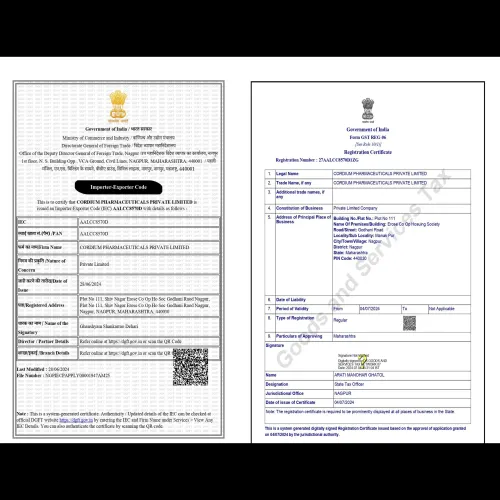
If Cordium Pharmaceuticals Pvt Ltd coordinates the supply, give the same checklist to the supplier and retain the documents with the receiving record.
Frequently asked questions
What is the difference between Capmide capsules and capecitabine tablets?
Capmide capsules contain enzalutamide, while capecitabine is supplied as 150 mg and 500 mg film-coated tablets. They have different active ingredients, dosage forms, indications, and dosing schedules.
Why cannot enzalutamide strengths be compared directly with capecitabine strengths?
The milligram figures refer to different active ingredients. Enzalutamide 40 mg, 80 mg, and 160 mg capsules cannot be compared with capecitabine 150 mg and 500 mg tablets or used as substitutes.
How should capecitabine tablets be taken during a treatment cycle?
Take capecitabine exactly as prescribed, usually with water within 30 minutes after a meal. Follow the prescribed treatment and rest days, and do not change the dose after a missed dose or side effect without contacting the treatment team.
Which checks can change a capecitabine or enzalutamide treatment plan?
Clinicians assess kidney and liver function, blood counts, symptoms such as severe diarrhoea or hand-foot syndrome, seizure risk, and interacting medicines. Report new symptoms and medicines before continuing treatment.
What should a professional buyer verify before accepting a shipment?
Match the product name, active ingredient, strength, dosage form, batch number, expiry date, pack size, and manufacturer against the purchase order and shipping documents. Check the seal, packaging, storage record, temperature exposure, and supplier licence documentation.