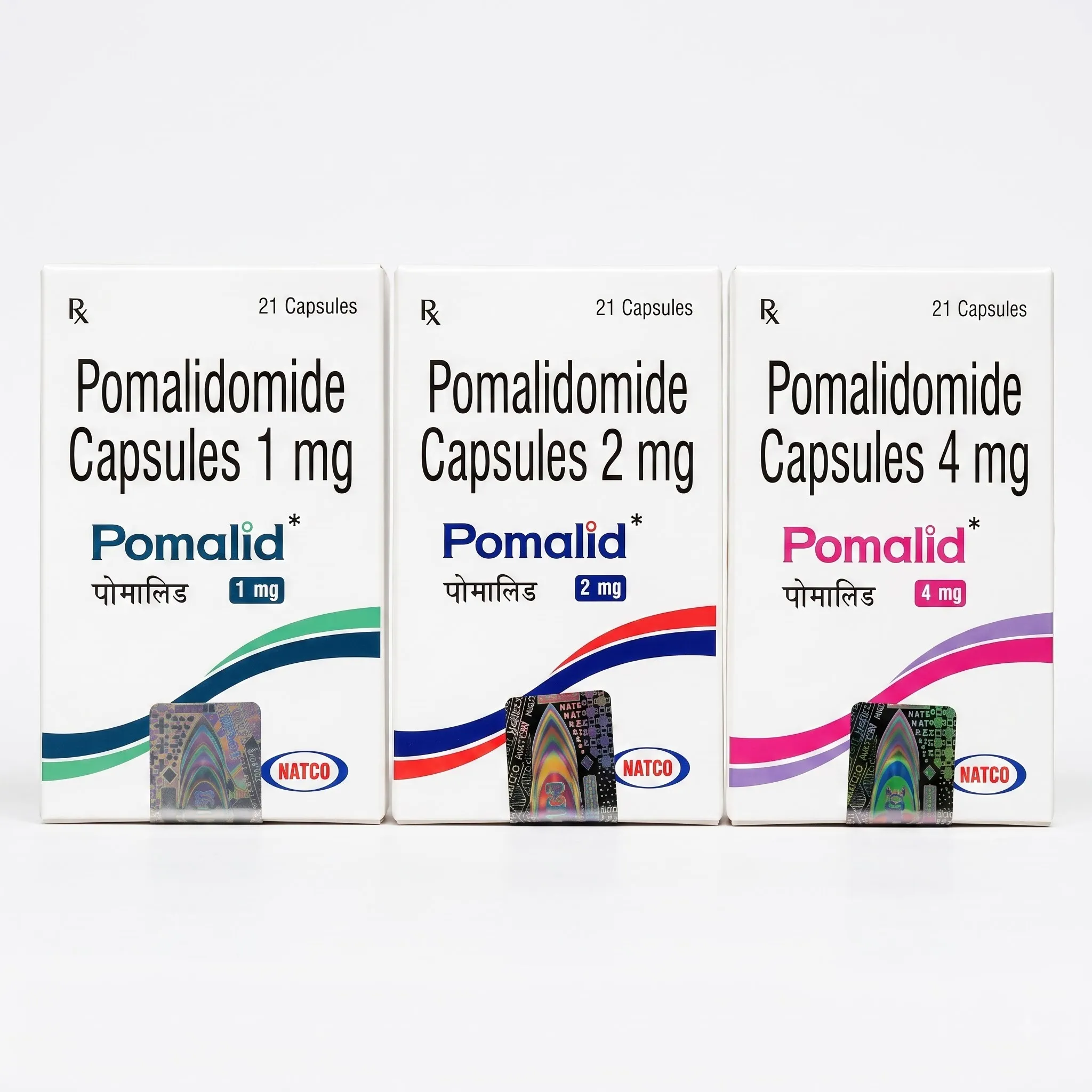
Pomalid capsules contain pomalidomide, a prescription medicine used under specialist supervision to treat certain cancers. This page offers general education for U.S. patients and caregivers. It is not medical advice and does not replace guidance from your oncologist or pharmacist.
What are Pomalid capsules?
Pomalid is a brand of pomalidomide capsules. Pomalidomide is an immunomodulatory agent that can affect how certain cancer cells grow and how the immune system responds. Responses vary from person to person, and your care team monitors you with regular exams and blood tests.
Pomalid capsule strengths
Pomalidomide capsules are made in four strengths. Your prescriber selects the strength and schedule for you.
- 1 mg
- 3 mg
- 4 mg
Never switch, combine or split strengths on your own. Check each label for the strength, lot number and expiration date.
Product specifications
This table summarizes key details to help identify the medicine. See the full prescribing information for complete data.
| Active ingredient | Pomalidomide |
|---|---|
| Dosage form | Capsule, oral use |
| Strengths | 1 mg, 3 mg, 4 mg [confirm against your FDA-approved labeling] |
| Package size | 30 Capsules |
| Drug class | Immunomodulatory agent |
| Legal status | Prescription only (Rx); REMS program |
| Storage | Room temperature in the original package [confirm range on label] |
| Manufacturer / labeler | Natco |
FDA-labeled uses of pomalidomide
According to the U.S. prescribing information for pomalidomide, it is indicated for:
- Adults with multiple myeloma who have received at least two prior therapies, including lenalidomide and a proteasome inhibitor, and whose disease progressed on or within 60 days of their last therapy, used with dexamethasone.
- Adults with AIDS-related Kaposi sarcoma after failure of highly active antiretroviral therapy, or with Kaposi sarcoma who are HIV-negative.
Your doctor decides whether it is appropriate based on your diagnosis, prior treatments and test results.
Boxed warnings and the REMS program
- Embryo-fetal toxicity: Pomalidomide must not be used during pregnancy. Females who can become pregnant must complete pregnancy testing and use reliable contraception as required by the REMS. Males must use a condom during treatment and for a period afterward, even after a vasectomy.
- Venous and arterial thromboembolism: Deep vein thrombosis, pulmonary embolism, heart attack and stroke have occurred. Your doctor may recommend preventive treatment.
- Restricted distribution: Only certified prescribers and certified pharmacies can prescribe and dispense it, and patients must enroll and follow program requirements.
Other warnings and precautions
Pomalidomide can lower white blood cells, red blood cells and platelets, so frequent blood counts are needed. Other risks include dizziness and confusion, nerve damage, liver problems, serious allergic and skin reactions, tumor lysis syndrome, thyroid changes and second primary cancers. Tell your doctor about any history of clots, heart, liver or kidney disease.
Common side effects
Reported effects include fatigue, low blood counts, constipation, nausea, diarrhea, shortness of breath, fever, back pain and upper respiratory infections.
Call 911 or seek emergency care for chest pain, sudden breathlessness, leg swelling or pain, weakness on one side, trouble speaking, severe headache or a severe rash. Call your care team promptly for fever, signs of infection, unusual bleeding or yellowing of the skin or eyes.
Taking and handling Pomalid safely
- Follow your prescription exactly and ask your pharmacist about missed doses.
- Swallow capsules whole with water; do not open, break or chew them.
- Caregivers should wear disposable gloves when handling capsules or packaging.
- Do not donate blood or sperm during treatment and for the period on your label.
- Keep out of reach of children and return unused capsules as your REMS program directs.
Drug interactions
Share a full list of your prescription, over-the-counter and herbal products. Certain medicines, including fluvoxamine and some antibiotics such as ciprofloxacin, can raise pomalidomide levels, and smoking may lower them. Your prescriber may adjust treatment accordingly.
Frequently asked questions
Can I buy Pomalid capsules without a prescription?
No. It requires a prescription from a certified prescriber and is dispensed by a certified pharmacy under the REMS.
Is pomalidomide safe during pregnancy?
No. It can cause severe, life-threatening birth defects.
How long will I take Pomalid?
Your oncologist decides based on your response, blood tests and side effects. Never stop on your own.
Reporting side effects
Tell your health care provider about any problem. You can also report side effects to FDA MedWatch at 1-800-FDA-1088 or fda.gov/medwatch.
Keywords