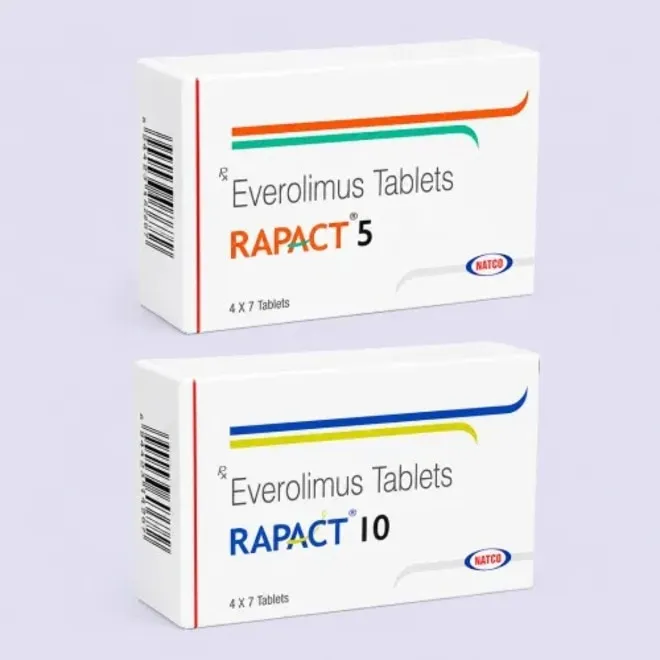
A 5 mg or 10 mg everolimus tablet is not adequately specified by its strength alone: the container-closure system, moisture and light barrier, approved pack count, artwork, traceability data, and transport controls all affect whether the shipment remains compliant. By the end, you will be able to compare blister and bottle proposals, check packaging documents, and identify the market-specific data required before release.
Key takeaways
- Match the blister, tablet count and container closure to the registered presentation.
- Check strength, batch number, expiry date and storage statement on every required pack component.
- Use destination-market barcode and serialization rules, not the exporting country’s assumptions.
- Approve packaging only after reviewing samples, stability evidence and traceability documents.
Which primary pack protects everolimus tablets through their labelled shelf life?
The primary pack protects everolimus tablets only when it matches the registered presentation and its stability evidence. The reference unit-dose blister pack for 5 mg and 10 mg tablets is commonly supplied as 28 tablets; do not treat a 30-tablet bottle, bulk pack, cut blister, or replacement container as equivalent.
Each is a new container-closure question.
| Format | Main protection question | Approval implication |
|---|---|---|
| Alu-alu blister | Do the foil layers, tablet-contact material, and seals limit moisture and light entry? | Use only with supporting stability and seal-integrity evidence |
| PVC/PVdC blister packaging | Does the PVC/PVdC barrier meet the product’s moisture-permeation requirement? | Confirm the exact grade, forming process, and registered configuration |
| Bottle | Is the bottle, closure, liner, desiccant, and opening frequency compatible with the tablets? | A 30-tablet or bulk bottle needs separate justification |
| Cut or replacement pack | Has repacking changed exposure, contact materials, or traceability? | Treat it as a packaging change requiring stability review |
Request the approved pack description, material specifications, seal-integrity results, moisture-permeation data, light-protection rationale, tablet-contact compatibility assessment, desiccant specification where used, and stability results for the proposed container. ICH Q1A(R2) evidence should cover long-term storage at 25 °C/60% RH or 30 °C/65% RH and accelerated storage at 40 °C/75% RH for six months.
The U.S. reference labelling states 20–25 °C, with permitted excursions of 15–30 °C—not unrestricted room temperature. ICH Q1B photostability confirmation uses 1.2 million lux hours and 200 Wh/m² of near-ultraviolet energy. A changed pack needs evidence against those risks before approval.
What must appear on the blister, carton, and leaflet?
Approve the artwork only when the blister foil, carton, and leaflet identify the same product without forcing the inspector to infer anything. The everolimus 5 mg label and everolimus 10 mg label must show the strength clearly as 5 mg or 10 mg, separate from “28 tablets” or another pack count.
1. Reconcile every controlled field across blister and carton: product name, strength, dosage form as tablets, tablet count, batch or lot number, expiry date, manufacturing date where required, storage statement, manufacturer, marketing authorisation holder, and required regulatory symbols.
A practical pharmaceutical packaging artwork comparison should show identical product identifier, strength, count, batch, expiry, and storage wording from blister foil to carton.
2. State the dosage form precisely. “Everolimus tablets” must not stand in for everolimus tablets for oral suspension or dispersible tablets, which have different administration instructions.
Keep the strength visually dominant over the count, and place the leaflet inside the carton where it remains with the correct pack; control its language and market version through an approved artwork master.
3. Treat translation as controlled artwork, not ordinary copyediting. A translated export label must not silently change the registered storage condition, shelf life, dosage form, or pack configuration. Confirm the destination market’s required symbols and wording before printing, then verify that the leaflet, carton, and blister carry the same approved presentation.
A mismatch can make a readable pack ambiguous, misidentified, or unusable at release.
How should cartons, shippers, and pallets protect traceability during export?
A carton must keep the blister readable and intact, not merely hold it. Specify board grade, dimensions, closure method, leaflet retention, and a tamper-evident seal; leave no space for tablets to rattle, and prevent compression that could crush cartons or puncture blisters.
Identify 5 mg or 10 mg, tablets, count, batch or lot, expiry, storage condition, and manufacturer exactly as approved.
- Define the export shipper case by internal dimensions, case pack quantity, stacking strength, and orientation marks. Use inserts or dividers when movement could loosen tablets, split blisters, or damage leaflets. Record the pallet configuration pharmaceuticals specification, including cases per layer, layers per pallet, maximum height, wrapping, and pallet label location.
- Print pallet and shipper labels with product name, strength, dosage form, batch or lot, expiry, case quantity, and pallet or case quantity. Reconcile packed, shipped, damaged, rejected, and remaining units before release.
- Build the document-to-pack chain: blister and carton data must match the export shipper case, commercial invoice, packing list, certificate of analysis, and purchase order. Do not accept a shipment where the batch, expiry, product name, strength, dosage form, or quantity differs at any level.
- Set GDP temperature monitoring from the product label and stability data, not the word “ambient.” Use calibrated monitors, qualified packaging or transport lanes where needed, and retain excursion records. Segregate and investigate crushed, punctured, opened, or loose-tablet packs as antineoplastic medicine; never return them to saleable stock without documented disposition.
Which barcode and serialization rules apply in the destination market?
A conventional EAN identifies a trade item; it does not provide destination-specific package identity or prove that a particular unit is genuine. Confirm the GS1 GTIN for everolimus or the destination product code, serial number, lot number, and expiry date before packing. Use the required 2D DataMatrix pharmaceutical serialization format, not a substitute logistics barcode.
Confirm these fields against approved artwork and the buyer’s data specification:
- European Union prescription supply: the unique identifier contains the product code, serial number, batch number, and expiry date. The pack also needs an EU FMD anti-tamper device under Delegated Regulation (EU) 2016/161.
- United States distribution: the DSCSA product identifier contains the National Drug Code, serial number, lot number, and expiration date in a standardized 2D DataMatrix.
- Any market-specific over-label: keep the original identifier readable and scannable, and do not cover, cut, or weaken the tamper-evident feature.
| Market | Required package identity | Control before shipment |
|---|---|---|
| European Union | Product code, serial number, batch, expiry, anti-tamper device | Scan each saleable pack and verify tamper evidence |
| United States | NDC, serial number, lot, expiration date | Scan each saleable pack and verify DSCSA data |
| Both | Unit-to-case-to-pallet aggregation | Reconcile every hierarchy and investigate scan failures |
Agree serialization, artwork, line qualification, and electronic data exchange with the destination and buyer before production. A carton scan alone is not enough.
What should an international buyer verify before approving the packaging specification?
Approve the specification only after the proposed pack matches the registered presentation and its shipment controls are documented. For everolimus tablets, compare the proposed blister or bottle with the commonly supplied 28-tablet unit-dose blister; a 30-tablet bottle, bulk pack, cut blister, or replacement container needs separate stability justification.
Use this international pharmaceutical packaging checklist:
- Request the approved pack description, container-closure specification, stability summary, photostability rationale, packaging-line controls, artwork proof, pack-count confirmation, serialization data, and transport plan.
- Obtain the certificate of analysis for the pharmaceutical shipment, batch release documents, and everolimus export documentation. Confirm that batch or lot number and expiry date match across the blister, carton, certificate, release record, invoice, and packing list.
- Confirm that 5 mg and 10 mg are visually unambiguous, the dosage form says tablets, tamper evidence is intact, package-level barcodes scan, and temperature limits, calibrated monitoring, qualified lanes, and excursion-investigation procedures are documented.
Compare the approval decision this way:
| Proposed presentation | Approval question | Disqualifying gap |
|---|---|---|
| Blister or bottle | Does it match the registered container-closure system? | No stability or compatibility evidence |
| Pack count and artwork | Do count, strength, storage wording, and market details match? | Uncontrolled label or count change |
| Serialization and transport | Do scans, aggregation, monitoring, and excursion records work? | Missing destination-market data or transport plan |
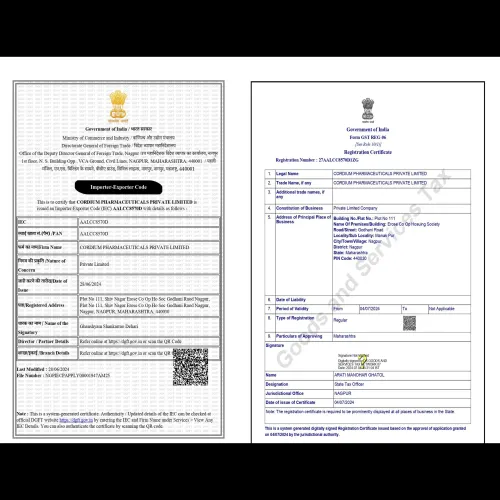
Ask which regulatory variation or supplement covers any change to the container, count, label, or market artwork. As part of pharmaceutical supplier qualification, Cordium Pharmaceuticals Pvt Ltd can coordinate manufacturer records, destination artwork, shipping controls, and buyer specifications rather than quote a tablet count alone.
Frequently asked questions
Which primary pack protects everolimus tablets through their labelled shelf life?
Use the registered primary pack supported by stability evidence. Treat a 28-tablet unit-dose blister presentation as different from a bottle, bulk pack, cut blister or replacement container.
What must appear on the blister, carton and leaflet?
Verify the approved strength, product name, tablet count, batch number, expiry date, storage statement, manufacturer details and required patient information across the registered pack components.
How should cartons, shippers and pallets protect traceability during export?
Keep batch and expiry details legible from blister through carton, shipper and pallet. Match packing lists, invoices and shipping records to the physical labels, and protect packs from crushing, moisture and temperature excursions.
Which barcode and serialization rules apply in the destination market?
Confirm the destination authority and buyer requirements for the barcode symbology, product identifier, serial number, batch number and expiry date. Do not assume an exporting-country code satisfies the importing market.
What should an international buyer verify before approving the packaging specification?
Compare approved artwork and pack configuration with samples, stability evidence, manufacturing documents, traceability records and destination-market labelling, barcode and serialization requirements.